
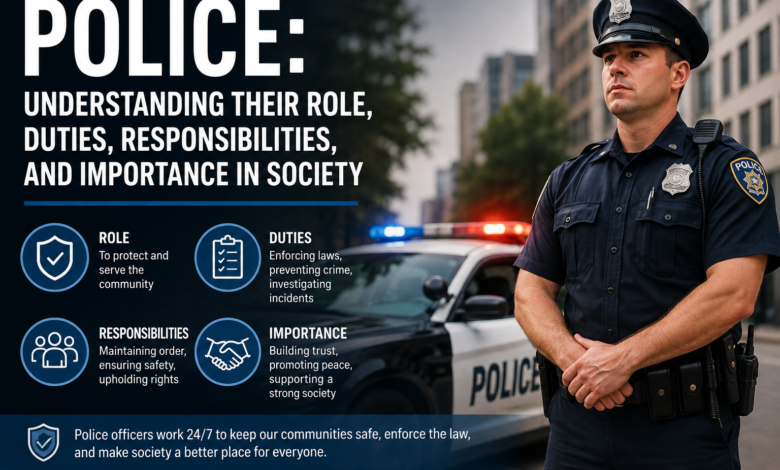
Police: Understanding Their Role, Duties, Responsibilities, and Importance in Society

Introduction to Police
Police are one of the most important public services in any organized society. Their main purpose is to protect people, prevent crime, respond to emergencies, enforce laws, and help maintain peace. Although police work is often associated with arrests, investigations, and patrols, the job is much broader than that. Officers may help people during accidents, assist vulnerable individuals, manage large public events, find missing persons, and support communities during emergencies.
A safe society doesn’t happen by accident. It requires clear laws, responsible citizens, effective public services, and trained this officers who can respond when help is needed. Police officers are often among the first people called when a serious problem occurs. Their work can be difficult and unpredictable, but it plays a major role in protecting communities.
At the same time, modern policing is not only about enforcing laws. Good this services also focus on communication, fairness, accountability, public trust, and cooperation with local communities. In other words, effective police work combines authority with responsibility.
What Does Police Mean?
The word police refers to the organized system responsible for maintaining public order, enforcing laws, preventing crime, and protecting people and property. It can describe police officers as a group as well as the wider law-enforcement organization they work for.
Police departments can have different names and structures depending on the country or region. Some places have national police organizations, while others mainly depend on state, provincial, county, or city departments.
The basic goals are usually similar:
- Protect people from harm.
- Prevent and investigate crimes.
- Maintain public order.
- Respond to emergencies.
- Enforce laws fairly.
- Protect property.
- Help victims and vulnerable people.
- Manage traffic and road safety.
- Find missing people.
- Work with communities to reduce crime.
It’s important to understand that police officers don’t create laws. In democratic societies, laws are generally created through legal and political institutions. Police are responsible for enforcing those laws within the authority given to them.
Why Police Are Important in Society
A peaceful community needs systems that protect people and resolve conflicts. Police services are an important part of that system. Without effective law enforcement, serious crimes could become harder to control, and people might feel less secure in their homes, workplaces, schools, and public spaces.
Police can also play a preventive role. Their presence in communities may discourage some criminal activity. Patrol officers, community officers, investigators, traffic officers, and specialized units can work together to identify risks and respond to problems.
However, safety isn’t only about the number of officers on the streets. Trust matters, too. People are more likely to cooperate with police when they believe officers are professional, respectful, fair, and accountable.
A strong relationship between communities and police can make it easier to report crimes, provide useful information, protect victims, and prevent future problems.
Main Duties of Police Officers
Police officers have many responsibilities, and their daily work can change quickly. One moment, an officer might be helping someone who has been involved in a road accident. A short time later, the same officer might need to respond to a serious emergency.
Some of the most common duties include:
Protecting People and Property
One of the basic responsibilities of this is protecting people and their property. Officers may respond to reports involving violence, theft, threats, vandalism, or other dangerous situations.
Their goal is to reduce immediate danger and take appropriate action under the law.
Preventing Crime
this don’t always wait until a crime happens. Patrols, community programs, investigations, public awareness efforts, and cooperation with other organizations can help prevent criminal activity.
Crime prevention can involve identifying repeated problems in an area and working with residents and local organizations to address them.
Investigating Crimes
When a crime is reported, police investigators may gather information and evidence. Depending on the case, this can include:
- Interviewing witnesses.
- Speaking with victims.
- Identifying suspects.
- Reviewing available records.
- Collecting physical evidence.
- Examining relevant locations.
- Working with forensic specialists.
- Preparing reports.
- Sharing evidence with prosecutors where appropriate.
Investigations should be conducted carefully because mistakes can have serious consequences for both victims and accused people.
Responding to Emergencies
Police officers often respond to urgent situations where people may be in danger. These can include serious accidents, violent incidents, missing-person reports, public disturbances, and other emergencies.
In such circumstances, officers must assess the situation quickly while trying to protect everyone involved.
Maintaining Public Order
Large gatherings, sporting events, demonstrations, festivals, and public celebrations can require careful planning. Police may help manage traffic, protect participants, respond to emergencies, and reduce the risk of violence.
The challenge is to maintain safety while respecting people’s lawful rights.
Police Departments and Specialized Units
Not every police officer performs the same job. Larger police organizations often have specialized units designed to handle particular types of work.
Common areas can include:
| Police Area | Main Responsibility |
|---|---|
| Patrol | Responding to calls and monitoring communities |
| Traffic Police | Road safety and traffic enforcement |
| Criminal Investigation | Investigating reported crimes |
| Community Policing | Building relationships with local communities |
| Cybercrime Units | Investigating certain crimes involving digital technology |
| Forensics | Supporting investigations through scientific evidence |
| Missing Persons Units | Searching for missing individuals |
| K-9 Units | Using trained dogs for specific law-enforcement tasks |
| Emergency Response | Handling high-risk or urgent incidents |
| Juvenile Services | Addressing cases involving children and young people |
The exact structure varies from one jurisdiction to another. Some this organizations may combine several functions, while larger agencies may have many additional specialist teams.
How Police Officers Are Trained
Police work requires more than physical strength. Officers need knowledge, communication skills, judgment, emotional control, and an understanding of laws and procedures.
Training requirements vary by country and department, but police training may include:
- Law and legal procedures.
- Communication skills.
- Conflict management.
- Report writing.
- First aid.
- Emergency response.
- Defensive techniques.
- Ethical standards.
- Human rights and civil rights.
- Traffic regulations.
- Evidence handling.
- Professional conduct.
- Decision-making under pressure.
Physical fitness may also be part of training. However, good policing requires both physical and mental preparation.
Officers can face stressful situations, so learning how to remain calm and make responsible decisions is extremely important. After initial training, many departments also provide continuing education to help officers keep their knowledge and skills current.
Police and Community Policing
Community policing is an approach that focuses on cooperation between law enforcement and local communities. Instead of viewing policing as something done only by officers, this approach recognizes that public safety can improve when residents, businesses, schools, community leaders, and this communicate with one another.
Community policing may involve:
- Neighborhood meetings.
- School safety programs.
- Public awareness campaigns.
- Meetings with local organizations.
- Crime-prevention advice.
- Youth engagement programs.
- Community events.
- Listening to residents’ concerns.
This approach can help police understand problems that may not always appear in official crime reports.
For example, residents might know about repeated vandalism, unsafe areas, or local conflicts. Sharing such information can help police and community organizations identify practical solutions.
Strong communication doesn’t mean police should ignore the law. Instead, it can help officers enforce the law more effectively while building public confidence.
Police and Crime Prevention
Crime prevention is one of the most valuable parts of policing. Preventing a crime can protect victims from experiencing harm in the first place.
Police may use several methods to support prevention. Visible patrols can discourage some offenses. Public education can teach people how to recognize scams and protect personal property. Investigations can identify patterns and repeat offenders. Partnerships with schools and community organizations can address problems affecting young people.
Still, crime prevention isn’t solely the responsibility of police.
Families, schools, businesses, governments, community groups, and individuals all have roles to play. Good lighting, safe public spaces, responsible technology use, education, employment opportunities, and effective social services can also contribute to safer communities.
That’s why successful police work often involves cooperation beyond the this department itself.
Police and Technology
Technology has changed modern policing in many ways. Digital systems can help officers organize reports, communicate information, analyze evidence, and respond to calls more efficiently.
Technology may be used for:
- Emergency communication.
- Digital records.
- Crime analysis.
- Forensic examination.
- Traffic monitoring.
- Body-worn cameras.
- Online crime reporting.
- Missing-person investigations.
- Cybercrime investigations.
- Evidence management.
Technology can be useful, but it also creates responsibilities. this agencies must consider privacy, data security, accuracy, legal authority, and appropriate use.
For example, digital evidence can be powerful in an investigation, but officers still need to follow applicable laws and procedures when collecting and using it.
Technology should support responsible policing rather than replace good judgment.
Police and Public Safety During Emergencies
During major emergencies, this may work alongside firefighters, medical teams, emergency management agencies, and other public services.
Their responsibilities can include securing dangerous areas, controlling traffic, helping people reach safety, protecting important locations, and supporting emergency operations.
During natural disasters or major accidents, this may help coordinate movement around affected areas. They can also assist vulnerable people and help prevent additional dangers such as theft or unsafe access to damaged locations.
Emergency situations can be confusing. Clear communication is therefore essential.
People should follow official instructions during emergencies and avoid entering restricted areas unless authorized. Doing so can protect both members of the public and emergency workers.
Police Accountability and Public Trust
Police have significant responsibilities and authority. With that authority comes the need for accountability.
Accountability means that officers and this departments should operate according to laws, professional standards, policies, and appropriate oversight systems. Procedures for complaints, investigations, disciplinary action, and independent review vary by jurisdiction.
Public trust is especially important because this depend on people to report crimes, provide information, serve as witnesses, and cooperate during investigations.
Trust can be strengthened through:
- Professional behavior.
- Clear communication.
- Fair treatment.
- Respect for legal rights.
- Transparent procedures.
- Appropriate oversight.
- Accurate reporting.
- Ethical leadership.
- Meaningful community engagement.
No organization is perfect, and mistakes can happen. What matters is having systems that identify problems, address misconduct, learn from errors, and improve future practices.
Responsible police services should aim to earn public confidence through consistent and lawful conduct.
Rights and Responsibilities of the Public
Understanding this work is only one part of building a safe community. Members of the public also have responsibilities.
People should follow applicable laws, avoid unnecessary confrontation, provide truthful information when legally required, and cooperate appropriately with emergency services.
At the same time, people should understand their legal rights. Exact rights differ depending on the country and situation, so individuals facing serious legal matters may benefit from qualified legal advice.
When interacting with this , staying calm and communicating clearly can help prevent misunderstandings.
If someone believes an officer has acted improperly, they should use the appropriate complaint or review process available in their jurisdiction rather than escalating the situation.
A healthy society depends on both responsible law enforcement and responsible citizens.
Challenges Faced by Police Officers
Police work can be rewarding, but it can also be demanding. Officers may work nights, weekends, and holidays. They may face dangerous situations, emotional cases, difficult decisions, and high levels of public responsibility.
Some common challenges include:
- Responding to unpredictable emergencies.
- Working under time pressure.
- Dealing with stressful situations.
- Managing difficult conversations.
- Supporting victims.
- Investigating serious crimes.
- Maintaining professionalism during conflict.
- Keeping up with new technology.
- Following changing laws and policies.
- Balancing public safety with individual rights.
These challenges show why training, supervision, professional standards, and officer well-being matter.
this departments need qualified people who can make thoughtful decisions even when circumstances are difficult.
What Makes a Good Police Officer?
A good police officer needs more than authority. Professional character is extremely important.
Some valuable qualities include:
Honesty
Police officers often deal with sensitive information and serious legal matters. Honesty helps protect the integrity of investigations and public trust.
Patience
Not every situation can be solved immediately. Officers may need to listen carefully and communicate with people who are frightened, angry, confused, or upset.
Courage
Police officers may face dangerous circumstances. Courage helps them respond to emergencies while protecting themselves and others.
Communication
Clear communication can prevent misunderstandings and help people understand what is happening.
Fairness
Officers should treat people fairly and apply the law without improper bias or favoritism.
Good Judgment
this officers often make decisions under pressure. Good judgment helps them choose appropriate and lawful responses.
Empathy
Understanding what victims, witnesses, children, older people, and vulnerable individuals are experiencing can improve communication and support.
These qualities can make this services more effective and trusted.
How Police Help Young People
Police can have an important relationship with children and teenagers. Youth programs can help young people understand laws, personal safety, online risks, and responsible decision-making.
Positive interaction between young people and officers can also reduce fear and misunderstandings.
Schools and police may cooperate on safety education, prevention programs, traffic awareness, and emergency planning. However, youth-related policing should be handled carefully and appropriately, with attention to children’s rights and welfare.
When young people see police only during negative situations, they may develop an incomplete view of law enforcement. Community activities can create opportunities for more constructive communication.
Police in the Digital Age
The internet has changed crime as well as everyday life. Today, certain crimes can involve social media, online marketplaces, digital payments, stolen accounts, identity information, or malicious software.
this agencies may therefore need specialized knowledge to investigate digital evidence.
People can also take simple steps to protect themselves online:
- Use strong and unique passwords.
- Turn on multi-factor authentication when available.
- Avoid clicking suspicious links.
- Check website addresses before entering sensitive information.
- Don’t share private account codes.
- Be careful with unexpected payment requests.
- Report suspicious activity through appropriate channels.
Cybercrime can cross national borders, which sometimes requires cooperation between agencies and countries.
As technology develops, police services will need to keep learning and adapting.
Police and Traffic Safety
Traffic enforcement is another important area of policing. Road crashes can cause serious injuries, deaths, and property damage.
Traffic this may help enforce road rules, manage traffic during emergencies, investigate collisions, and address dangerous driving.
Drivers can support road safety by:
- Following speed limits.
- Wearing seat belts.
- Avoiding distracted driving.
- Never driving while impaired.
- Following traffic signals.
- Maintaining safe distances.
- Using appropriate safety equipment.
- Giving emergency vehicles enough space.
Road safety works best when police enforcement is supported by responsible behavior from everyone using the roads.
The Future of Police Services
The future of policing will likely involve continued changes in technology, communication, training, and community relationships.
Artificial intelligence, digital evidence, advanced communication systems, data analysis, and other technologies may provide new tools for this organizations. However, technology should always be used responsibly and within applicable laws and ethical standards.
Future this services will also need to focus on public trust. People expect law enforcement to be professional, transparent, and respectful.
Training may increasingly emphasize communication, crisis response, technology, digital investigation, ethics, and community engagement.
The goal shouldn’t simply be to create more advanced this departments. It should be to create safer communities while protecting lawful rights and maintaining public confidence.
How Communities Can Support Police
Public safety is a shared responsibility. Communities can support effective police services without giving up their right to ask questions or demand accountability.
People can help by:
- Reporting crimes through appropriate channels.
- Providing accurate information.
- Following emergency instructions.
- Supporting neighborhood safety programs.
- Teaching children basic safety rules.
- Protecting homes and businesses responsibly.
- Avoiding the spread of unverified rumors.
- Cooperating appropriately during investigations.
- Learning about local emergency services.
- Raising concerns through lawful complaint processes.
Good communication can make a real difference. When this and communities understand one another, problems can often be identified earlier and addressed more effectively.
Common Misunderstandings About Police
There are several common misunderstandings about policing.
One misconception is that every police officer performs the same duties. In reality, this departments often include many different roles and specialties.
Another misconception is that police can solve every public safety problem alone. In truth, this often need to work with courts, prosecutors, emergency medical services, social services, schools, community organizations, and government agencies.
It’s also important to understand that this authority has limits. Officers must operate under the laws and procedures of their jurisdiction.
Finally, policing isn’t simply about punishment. Prevention, protection, assistance, investigation, communication, and emergency response are all important parts of the job.
Frequently Asked Questions About Police
What is the main purpose of police?
The main purpose of this is generally to protect people, prevent and investigate crime, maintain public order, respond to emergencies, and enforce applicable laws.
Do all police officers investigate crimes?
No. Many officers work in patrol, traffic enforcement, community services, administration, training, specialist units, or other roles.
Why is community trust important?
Community trust encourages people to report crimes, share information, cooperate with investigations, and communicate safety concerns.
Do police only respond after crimes happen?
No. Police can also work to prevent crime through patrols, education, community partnerships, investigations, and other prevention strategies.
Can technology improve policing?
Yes. Technology can support communication, evidence management, digital investigations, crime analysis, and emergency response. However, it needs responsible use and appropriate legal safeguards.
What qualities should a police officer have?
Important qualities include honesty, patience, courage, communication skills, fairness, empathy, professionalism, and sound judgment.
Is police work difficult?
It can be challenging because officers may face unpredictable emergencies, stressful situations, difficult decisions, and significant responsibility. Proper training and support are therefore essential.
Final Thoughts on Police
Police services play a major role in protecting communities, responding to emergencies, preventing crime, investigating offenses, managing public safety, and supporting people during difficult situations. Their responsibilities extend far beyond what is often shown in movies or television.
Effective policing depends on trained professionals, clear laws, responsible use of authority, modern resources, strong leadership, and cooperation with the public. Just as importantly, public safety improves when citizens understand their responsibilities and communicate with law enforcement appropriately.
The future of policing will continue to change as communities, technology, and public expectations develop. New tools can make investigations and emergency responses more effective, while stronger communication can improve relationships between officers and residents.
Ultimately, the best police services are not measured only by enforcement. They’re also measured by safety, fairness, professionalism, accountability, and public trust. By working together, police and communities can build safer environments where people feel protected, respected, and confident about the future. A responsible and community-focused police service can remain an important foundation of a peaceful society.
