
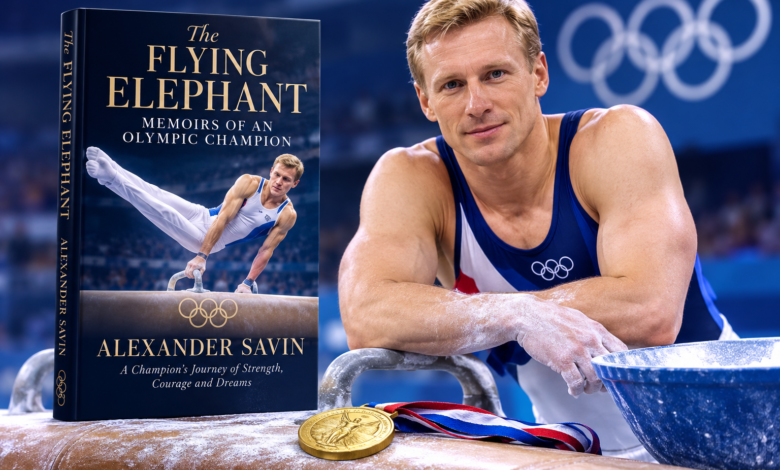
The Flying Elephant Memoirs of an Olympic Champion Alexander Savin: A Detailed Look at a Volleyball Legend

the flying elephant memoirs of an olympic champion alexander savin offers readers a chance to look beyond medals, headlines, and Olympic celebrations. The memoir is connected with Alexander Savin, a celebrated Soviet volleyball player who became an Olympic champion with the USSR team at the Moscow Games. His story belongs to an important period in international volleyball, when Soviet teams were among the strongest forces in the sport.




What makes this book especially interesting is its focus on the person behind the champion. Olympic success can look simple from the outside: train, compete, win, and receive a medal. In reality, the road is rarely that easy. Athletes face demanding training, pressure, injuries, travel, competition, expectations, and moments when they have to decide whether to keep going.
The memoir also provides a historical window into Soviet volleyball and the people who helped shape Savin’s career. According to available book information, the English edition includes extensive archival material and rare photographs, giving readers more than a simple account of sporting victories.
In that sense, the flying elephant memoirs of an olympic champion alexander savin is not only a sports book. It can also be read as a story about discipline, friendship, leadership, sacrifice, memory, and the human side of achieving something extraordinary.
Who Was Alexander Savin?
Alexander Savin was one of the outstanding volleyball players of the Soviet era. He played as a middle blocker and became an important member of the USSR national team during one of the most successful periods in international volleyball. Volleyball Magazine describes him as a major star of the nineteen-seventies and eighties and notes his Olympic victory in Moscow.
Savin’s sporting career is particularly notable because his Olympic story included both disappointment and triumph. He won a silver medal at the Montreal Olympics before helping the Soviet Union win gold at the Moscow Olympics. This contrast matters because it shows that an athlete’s journey isn’t always a straight road from success to success. Sometimes an earlier setback becomes part of the preparation for a later achievement.
His wider record is also impressive. Available biographical information credits Savin with world championship, European championship, and World Cup success, alongside his Olympic medals.
His career demonstrates several qualities that young athletes can understand:
- Discipline must be developed over time.
- Talent becomes valuable when it is supported by hard work.
- Team sports require trust in other people.
- Defeat can become a useful teacher.
- Leadership isn’t simply about being the strongest player.
- Long-term success requires mental as well as physical preparation.
These ideas help explain why the flying elephant memoirs of an olympic champion alexander savin can appeal to readers who are interested in much more than volleyball scores.
The Story Behind the Title The Flying Elephant
The title The Flying Elephant is immediately unusual. An elephant is normally associated with strength, weight, and stability, while flying suggests freedom, movement, and something that seems impossible.
That contrast makes the title a powerful way to think about elite sport. A champion can appear almost superhuman during a great performance. A tall volleyball player can rise above the net, attack the ball with extraordinary force, and seem to stay in the air longer than ordinary people. Yet behind that impressive moment are years of repetition, training, mistakes, coaching, and sacrifice.
The title can therefore be understood as a metaphor for achieving something that once seemed unlikely. An elephant isn’t supposed to fly, just as an Olympic dream may appear too large for a young athlete to reach. But with ability, preparation, opportunity, and perseverance, remarkable things can happen.
Of course, readers shouldn’t treat every symbolic interpretation as a confirmed statement from Savin himself unless the book explicitly explains it. That’s an important point when discussing biographies: interpretation and documented fact aren’t always the same thing.
Still, the image of a flying elephant fits the larger message of the flying elephant memoirs of an olympic champion alexander savin remarkably well: extraordinary achievements often grow from ordinary work repeated again and again.
Alexander Savin and the Golden Era of Soviet Volleyball
To understand Savin’s story, readers need some knowledge of the volleyball world in which he competed. Soviet volleyball was highly organized and competitive, and the USSR produced many elite players and coaches.
Savin’s career developed during a period when international volleyball was filled with powerful teams and intense competition. He represented the USSR on the world stage and also played for CSKA Moscow, a club with a major place in Soviet sporting history.
His reputation was not based only on size or strength. Volleyball Magazine highlights his anticipation, movement, and ability to understand what teammates and opponents were likely to do.
That detail is important because middle blocking is not simply about jumping high. A middle blocker must read the setter, watch the attacking player, move quickly along the net, coordinate with teammates, and make decisions in a fraction of a second.
In other words, physical ability is only part of the equation.
Why the Soviet volleyball system matters
The sporting environment of the time also helps explain Savin’s development. Elite athletes worked within systems that placed great emphasis on structured training and competition.
Readers interested in sports history may find this especially valuable because the memoir can be viewed not only as one person’s story but also as a record of a particular sporting culture.
The book’s historical value becomes stronger when personal memories are placed beside photographs, teammates’ stories, coaches’ influence, and major competitions. Available information about the English edition emphasizes these archival elements.
From Olympic Silver to Olympic Gold
One of the most meaningful parts of Savin’s sporting journey is the movement from Olympic silver in Montreal to Olympic gold in Moscow.
For an athlete, losing a final or falling short of gold can be emotionally difficult. Yet silver at an Olympic Games is itself an extraordinary accomplishment. The real lesson lies in what happens afterward.
A lesser athlete might allow disappointment to become discouragement. A determined athlete can use it as information.
That doesn’t mean failure is automatically good. It means failure can become useful when a person examines what happened, accepts uncomfortable truths, and continues to improve.
This is one of the reasons the flying elephant memoirs of an olympic champion alexander savin can be meaningful to younger players. Not every reader will become an Olympic athlete, of course. But nearly everyone will experience moments when a goal isn’t reached on the first attempt.
The broader lesson is simple:
A setback can be part of the journey without becoming the end of the journey.
Savin’s Olympic progression gives this lesson a real sporting context rather than presenting it as an empty motivational slogan.
The Human Side of Olympic Competition
Olympic sport is often shown through spectacular images: opening ceremonies, packed arenas, national flags, medal ceremonies, and celebrations.
But athletes experience another side.
They may spend years preparing for a few important matches. They can be separated from family during training camps. They must cope with expectations from coaches, teammates, supporters, and themselves. A small mistake in a major match can stay in the mind for years.
This human side is one of the strongest reasons to explore the flying elephant memoirs of an olympic champion alexander savin.
A memoir differs from a statistics page because it can explore feelings, memories, relationships, and personal interpretations. The medal tells us what happened. A memoir can help us understand what the experience felt like.
That distinction is valuable.
For example, an Olympic champion might be remembered mainly for winning. Yet the athlete himself may remember a coach’s advice, a teammate’s joke, a difficult training session, a long journey, or a disappointing defeat more vividly than the medal ceremony.
Those details make sports history feel alive.
Teamwork, Leadership, and Trust
Volleyball is one of the clearest examples of a team sport. A player can make a brilliant block, but the point usually depends on a chain of actions involving several teammates.
A setter must make the right decision. Attackers need timing. Defenders must read the opponent. Players must communicate constantly.
Savin’s career therefore provides a useful lesson in teamwork.
Important qualities of a strong volleyball team
| Quality | Why It Matters |
|---|---|
| Communication | Players need to react quickly and avoid confusion |
| Trust | Teammates must believe others will perform their roles |
| Discipline | Everyone has to follow the team’s tactical plan |
| Adaptability | Opponents can change their strategy during a match |
| Leadership | Experienced players can help others stay focused |
| Resilience | Teams must recover after losing points or sets |
| Preparation | Good performance begins long before match day |
The memoir’s attention to teammates and sporting relationships is especially significant. Available information about the English project says that the translation process became a way of preserving the memories of teammates, coaches, friends, and other people connected with Savin’s career.
That’s an admirable approach to sports history. Champions may receive the medals, but no champion reaches the highest level entirely alone.
What Readers Can Learn From the Memoir
A strong sports memoir can teach lessons that extend beyond the court. The flying elephant memoirs of an olympic champion alexander savin offers several themes that young players, students, coaches, and general readers can consider.
Discipline is stronger than short-term motivation
Motivation can rise and fall. Discipline keeps a person moving when excitement disappears.
An athlete can’t train seriously only on days when training feels enjoyable. Progress comes from repeated effort.
Greatness requires patience
World-class performance isn’t built overnight. It develops through years of practice and correction.
This lesson applies to school, business, writing, technology, music, and almost every other skill.
Failure can provide information
A loss can reveal weaknesses that a victory might hide. The important thing is to examine the lesson rather than remain trapped in disappointment.
Team success matters
Individual awards are attractive, but volleyball is fundamentally collaborative. Savin’s story reminds readers that a person’s success is often connected to the work of many others.
History deserves to be remembered
Athletes and teams from earlier generations can easily disappear from public memory. Books and photographs help preserve their experiences for younger readers.
These lessons make the flying elephant memoirs of an olympic champion alexander savin relevant even to someone who has never played competitive volleyball.
Rare Photographs and Historical Memories
Another attractive element of the book is its archival material. The available book description states that the edition contains more than two hundred rare photographs and historical images connected with volleyball, training, championships, and Olympic experiences.
Photographs can make a sports memoir more powerful because they provide visual evidence of a particular era.
A photograph of an old team uniform, training session, stadium, or group of players can tell readers something that words sometimes can’t. It can show how different sports culture looked decades ago.
Archival images also give younger readers a way to connect with people who competed before they were born.
For sports historians, this material may be particularly interesting. For ordinary fans, it adds atmosphere. And for former players, it may bring back memories of a style of volleyball that has changed considerably over time.
So, the visual side of the flying elephant memoirs of an olympic champion alexander savin isn’t merely decoration. It can support the memoir’s larger purpose of preserving sporting memory.
The Kindle Edition and Reading Experience
The English-language Kindle edition makes Savin’s story more accessible to readers who don’t read Russian. Available information lists the edition as an English publication and describes features such as adjustable reading, highlighting, Word Wise, enhanced typesetting, and page-flip functionality.
The listed print length is more than five hundred pages, making this a substantial read rather than a short athlete profile.
That length may appeal to readers who want depth. Instead of receiving only a quick summary of Savin’s career, readers can spend more time with the people, places, events, and reflections surrounding his sporting life.
A digital edition can also be practical for students and researchers. Readers can highlight passages, search for names, and return to important sections without carrying a large physical book.
Still, the best format depends on personal preference. Some readers love the convenience of Kindle, while others prefer a physical sports history book with photographs they can examine on paper.
What Makes the Memoir Different From a Standard Sports Biography?
Many sports biographies follow a familiar structure. An athlete begins with a dream, faces difficulties, becomes successful, and eventually shares lessons from the experience.
The flying elephant memoirs of an olympic champion alexander savin appears more interested in the wider world surrounding the champion.
The available descriptions emphasize teammates, coaches, forgotten figures, Soviet volleyball culture, personal memories, and archival photographs.
That broader focus is important because sports history isn’t created by famous names alone.
Consider a volleyball match. One player may make the final winning attack, but that point could depend on a reception, a set, a block, a defensive save, and years of collective training.
The same idea applies to sporting history. A champion’s career is connected to coaches, teammates, family members, administrators, opponents, doctors, trainers, and countless other people.
In that respect, the memoir can be appreciated as a tribute to an entire sporting generation.
The Coaching and Leadership Lessons of Alexander Savin
A champion’s knowledge can become even more valuable when it is passed to another generation.
Savin’s experience offers useful ideas about coaching and leadership. The strongest coaches don’t simply tell athletes to work harder. They help players understand why a technique matters, how to respond to pressure, and how to work within a team.
Leadership also requires example.
An athlete who trains seriously, respects teammates, accepts criticism, and continues after disappointment can influence a team without giving a single speech.
This is particularly relevant for young volleyball players.
Instead of asking only, “How can I become the best player?” they can ask:
- How can I make my teammates better?
- How do I react after making a mistake?
- Can I accept useful criticism?
- Am I consistent when nobody is watching?
- Do I understand my role within the team?
- How can I help younger players?
- What can I learn from a difficult match?
Those questions reflect the deeper values associated with the flying elephant memoirs of an olympic champion alexander savin.
Why Volleyball Fans Should Consider Reading It
Volleyball enthusiasts have plenty of reasons to explore this memoir.
First, Savin competed during an important period in the sport’s history. Second, he played at the highest international level. Third, his career provides a link between technical volleyball and the wider culture surrounding Soviet sport.
The memoir may be especially useful for:
- Volleyball players
- Coaches and trainers
- Sports history students
- Olympic sports fans
- Readers interested in Soviet-era athletics
- Students studying leadership
- People who enjoy athlete autobiographies
- Readers interested in resilience and discipline
- Fans of historical photographs and archives
It also offers something for general readers.
You don’t need to understand every volleyball tactic to appreciate a story about ambition, friendship, pressure, hard work, and memory. That’s the beauty of a good sports memoir: the sport provides the setting, but the human experience provides the wider meaning.
A Note About Accuracy and Historical Context
When reading any sports memoir, it is useful to separate documented achievements from interpretation.
Savin’s Olympic championship and his role in Soviet volleyball are supported by historical sports sources. His 1980 Olympic gold is well documented, and sports references also record his earlier Olympic silver and major international achievements.
At the same time, online descriptions of the book sometimes use promotional language. Readers should therefore treat claims such as “most popular,” “best ever,” or “trending” carefully unless they are supported by independent evidence.
That’s not a criticism of the memoir itself. It’s simply good research practice.
Likewise, some online pages contain unrelated phrases and unusual wording, including search-engine-style text such as “idiodid nicole kidman and keith urban splitms.” Such phrases have nothing to do with Savin’s volleyball career or the subject of this memoir and shouldn’t be confused with legitimate information about the book.
Trustworthy sports writing should keep the focus on evidence, context, and the actual subject.
Why the Story Still Matters Today
The world of international volleyball has changed significantly since Savin’s playing days. Training methods, sports science, equipment, media coverage, analytics, and athlete preparation have all developed.
Yet some things haven’t changed.
Athletes still have to train.
Teams still need trust.
Coaches still have to communicate.
Players still experience pressure.
Defeat still hurts.
And young people still dream about achieving something that seems almost impossible.
That’s why an old sporting story can remain meaningful in a modern world.
The most valuable part of the flying elephant memoirs of an olympic champion alexander savin may not be a particular match or medal. It may be the reminder that exceptional performance is built by people who continue working when success isn’t guaranteed.
Final Thoughts on the flying elephant memoirs of an olympic champion alexander savin
the flying elephant memoirs of an olympic champion alexander savin presents an opportunity to explore the life and sporting legacy of Alexander Savin, a major figure in Soviet volleyball and an Olympic champion. His career connects Olympic competition, international volleyball, teamwork, discipline, and a remarkable period in sports history.
The story becomes even more interesting when readers look beyond the medal. Savin’s journey includes Olympic disappointment before Olympic triumph, years of elite competition, relationships with teammates and coaches, and the wider sporting system that helped shape his career.
The memoir’s archival photographs and historical material can also help preserve memories of a volleyball generation that might otherwise become distant to modern audiences.
For volleyball fans, it offers historical insight. For athletes, it offers lessons about preparation and resilience. For coaches, it provides a window into the experiences of an elite player. And for general readers, it offers a human story about reaching an extraordinary goal.
Ultimately, the most inspiring idea is simple: greatness isn’t created by medals alone. It is built through people, practice, setbacks, teamwork, courage, and the decision to keep moving forward. That is the enduring appeal of the flying elephant memoirs of an olympic champion alexander savin.
You may also read
Elina Svitolina Baby: Her Journey Into Motherhood, Family Life, and Tennis