
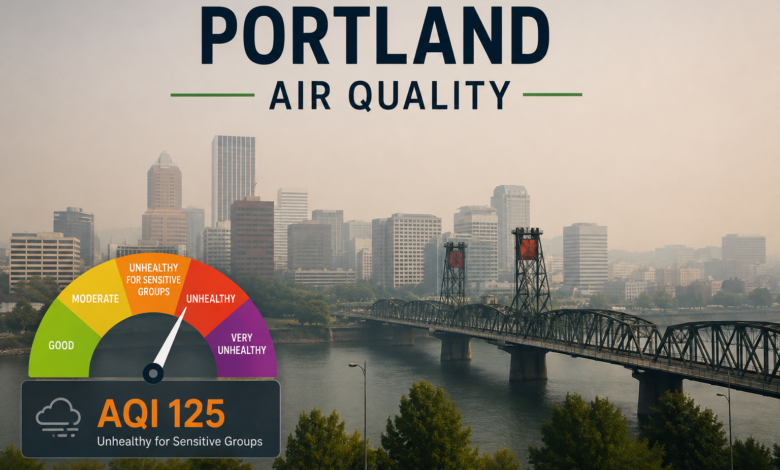
Portland Air Quality: A Complete Guide to Air Pollution, AQI, Wildfire Smoke, and Healthy Living

Understanding Portland Air Quality
Portland air quality is an important topic for residents, visitors, families, outdoor workers, and anyone who enjoys spending time outside. Portland, Oregon, is known for its green spaces, rivers, parks, mild climate, and beautiful natural surroundings. However, like many cities in the Pacific Northwest, Portland can experience periods when air pollution becomes a serious concern.
On most ordinary days, air quality can be quite comfortable, but conditions can change because of weather, traffic, industrial activity, wood smoke, and especially wildfire smoke. During the summer and early fall, smoke from wildfires can travel long distances and affect communities far away from the original fire.
The good news is that Portland has strong air-quality monitoring systems. The Oregon Department of Environmental Quality, or DEQ, monitors pollution and provides public information about air conditions. The U.S. Environmental Protection Agency’s AirNow system also provides current air-quality information and wildfire smoke maps.
For that reason, understanding portland air quality doesn’t have to be difficult. By learning what the AQI means, knowing which pollutants matter, and checking reliable forecasts before going outdoors, people can make smarter choices every day.
What Is the Air Quality Index?
The Air Quality Index, commonly called AQI, is a simple way to describe how clean or polluted the air is. Instead of requiring people to understand complicated pollution measurements, the AQI uses numbers and categories to explain possible health effects.
Oregon’s air-quality index considers pollutants regulated under the federal Clean Air Act. These include ground-level ozone, particle pollution, and nitrogen dioxide. The pollutant with the highest AQI value determines the reported AQI for the location.
Generally, a lower AQI is better. A higher value means that pollution is more significant and that health concerns may increase.
| AQI Level | General Meaning | What It Can Mean |
|---|---|---|
| Good | Clean air | Little risk for most people |
| Moderate | Air is generally acceptable | Some unusually sensitive people may notice effects |
| Unhealthy for Sensitive Groups | Increased concern | Sensitive people may need to reduce prolonged outdoor activity |
| Unhealthy | Health risk increases | More people may experience symptoms |
| Very Unhealthy | Serious health concern | Outdoor exposure should be reduced |
| Hazardous | Emergency-level pollution | Everyone should take strong precautions |
Oregon DEQ explains that an AQI of 50 or below represents good air quality with little potential to affect even people with respiratory conditions. As the AQI rises, health concerns also increase.
When checking portland air quality, don’t focus only on the number. Look at the pollutant responsible for the reading, the forecast, and whether wildfire smoke is moving into the region.
Why Portland Air Quality Changes
Air quality isn’t fixed. It can change from morning to afternoon and from one day to the next. Weather plays a major role in how pollution moves through the atmosphere.
Wind can carry pollution away from an area and bring cleaner air into the city. Rain can also help remove some particles from the air. On the other hand, calm weather can allow pollution to remain near the ground.
Temperature and atmospheric conditions matter, too. During certain weather patterns, pollutants can become trapped close to the surface. This can lead to poorer local air conditions.
Several factors can influence portland air quality, including:
- Wildfire smoke
- Vehicle emissions
- Ground-level ozone
- Fine particle pollution
- Wood smoke
- Industrial emissions
- Construction dust
- Weather and wind
- Temperature inversions
- Regional pollution transported from other areas
That’s why yesterday’s air quality isn’t necessarily a good guide to today’s conditions. Checking a current monitoring source is the safest approach.
Wildfire Smoke and Portland Air Quality
Wildfire smoke is one of the biggest reasons Portland can experience sudden changes in air quality. Fires don’t need to be burning inside Portland to affect the city. Smoke can travel hundreds of miles depending on wind direction and atmospheric conditions.
Wildfire smoke contains fine particles known as PM2.5. These particles are extremely small—less than 2.5 micrometers in diameter. Oregon DEQ notes that PM2.5 is a major concern during wildfire smoke events.
PM2.5 can enter deep into the lungs. Smoke exposure may irritate the eyes and respiratory system and can make existing heart or lung problems worse. Portland’s official emergency guidance specifically warns that wildfire smoke can create health problems, especially for vulnerable groups.
During a smoke event, the sky may appear hazy or orange, and the smell of smoke may become noticeable. However, smell and visibility aren’t reliable ways to judge pollution levels. A person may sometimes be exposed to harmful particles without noticing a strong smell.
The better choice is to check an official air-quality monitor.
What Is PM2.5?
PM2.5 means fine particulate matter with a diameter of 2.5 micrometers or smaller. Because these particles are so small, they can travel deep into the respiratory system.
PM2.5 is particularly important when discussing portland air quality during wildfire season. Oregon DEQ identifies fine particles as a major concern in the western United States, especially during wildfire smoke events.
PM2.5 can come from several sources, including:
- Wildfires
- Wood-burning stoves and fireplaces
- Vehicle exhaust
- Industrial processes
- Construction and other combustion sources
During a heavy smoke event, wildfire emissions can become the dominant source.
People should pay special attention to PM2.5 when deciding whether to exercise outdoors. Running, cycling, or doing hard physical work causes faster and deeper breathing, which can increase the amount of polluted air entering the lungs.
How Wildfire Smoke Can Affect Health
Wildfire smoke doesn’t affect everyone in exactly the same way. Some healthy adults may experience only temporary irritation, while others may have stronger reactions.
Common short-term effects can include:
- Coughing
- Scratchy throat
- Burning or watery eyes
- Nose irritation
- Headache
- Difficulty breathing
- Wheezing
- Increased tiredness
- Chest discomfort
Smoke can be especially concerning for children, older adults, pregnant people, and individuals with certain heart or respiratory conditions. Portland’s official wildfire smoke guidance recommends taking protective measures when air quality becomes unhealthy.
That doesn’t mean people should panic whenever smoke appears. Instead, the goal is to reduce unnecessary exposure and follow reliable public health guidance.
Who Should Pay Extra Attention to Portland Air Quality?
Everyone can benefit from cleaner air, but some people may be more sensitive to pollution.
These groups should pay close attention to air-quality forecasts:
- Children
- Older adults
- People with asthma
- People with chronic lung conditions
- People with certain heart conditions
- Outdoor workers
- People who exercise outdoors
- People who are particularly sensitive to smoke
For these groups, an AQI that seems manageable to a healthy adult may still be a reason to reduce outdoor activity.
Parents can also use air-quality information when planning outdoor activities for children. A playground trip, sports practice, or long bike ride may need to be moved indoors when smoke levels rise.
How to Check Portland Air Quality Today
One of the most important lessons about portland air quality is that readers should check current information rather than rely on old articles or general statements.
Oregon DEQ provides an Air Quality Index with monitoring stations across the state. Its system gives near-real-time information and allows users to view air conditions at monitoring stations. DEQ also provides the OregonAir mobile application.
AirNow, operated by the U.S. Environmental Protection Agency and its partners, is another valuable source. Its website lets users search by city or ZIP code for air-quality information.
During wildfire smoke events, AirNow recommends using its Fire and Smoke Map. The map focuses on PM2.5, shows smoke plumes and fire locations, provides smoke forecasts when available, and offers recommendations for reducing exposure.
For the most useful picture, check:
- Current AQI
- PM2.5 levels
- Ozone levels
- Air-quality forecast
- Wildfire smoke maps
- Local health advisories
- Wind direction
- Expected changes during the day
Portland Air Quality and Outdoor Exercise
Portland is a city where people enjoy walking, running, cycling, hiking, and other outdoor activities. When air quality is good, outdoor exercise can be an excellent part of a healthy lifestyle.
However, poor air quality changes the equation.
When pollution or smoke levels rise, consider reducing the intensity and length of outdoor exercise. A hard workout makes you breathe faster, which can increase exposure to polluted air.
If smoke is heavy, consider moving your workout indoors. A gym, indoor walking route, home workout, or other cleaner-air environment may be a better option.
Don’t rely on how you feel alone. Air pollution isn’t always obvious, and people can become exposed before they notice symptoms.
In short, when planning an outdoor workout, check portland air quality first.
Keeping Indoor Air Cleaner During Smoke Events
When outdoor air becomes unhealthy, staying indoors can reduce exposure, but indoor air isn’t automatically clean. Smoke can enter through open windows, doors, cracks, and ventilation systems.
There are several practical ways to improve indoor air during a smoke event.
Keep Windows and Doors Closed
If outdoor smoke levels are high, close windows and doors as much as practical. Avoid bringing smoky outdoor air inside unnecessarily.
Use Air Conditioning Wisely
If you have an air-conditioning system with appropriate filtration and a setting that limits outdoor-air intake, it can help maintain a more comfortable indoor environment. Follow the equipment manufacturer’s instructions.
Consider a Portable Air Cleaner
A properly sized portable air cleaner can help reduce airborne particles indoors. A high-efficiency particle filter is useful for removing fine particles.
Create a Cleaner-Air Room
During a significant smoke event, choose a room where windows and doors can remain closed. Keeping the room comfortable and using suitable filtration can provide a cleaner space for people who are more sensitive to smoke.
Avoid Creating More Indoor Smoke
During poor outdoor conditions, it’s wise to avoid activities that add particles indoors, such as smoking or burning candles. Cooking can also create indoor particles, so ventilation and filtration become important.
The goal isn’t to make a home perfectly pollution-free. Rather, it’s to reduce exposure as much as reasonably possible.
Portland Air Quality and Transportation
Transportation can also influence urban air quality. Cars, trucks, buses, and other vehicles produce emissions that can contribute to pollution.
Portland’s transportation choices can therefore play a role in local air conditions. Walking, cycling, public transportation, and carpooling can reduce the number of individual vehicle trips when these options are practical.
Of course, transportation isn’t the only factor. Weather, regional pollution, wildfire smoke, and other sources can have a much larger influence during certain periods.
Still, cleaner transportation choices can support healthier urban environments over the long term.
For individuals, even small changes can help:
- Combine errands into fewer trips.
- Walk or cycle when conditions are safe and practical.
- Use public transportation when convenient.
- Avoid unnecessary idling.
- Maintain vehicles properly.
- Choose less-polluting transportation when possible.
These actions won’t solve every air-quality problem overnight, but they can contribute to a cleaner community.
Portland Air Quality During Different Seasons
Air quality patterns can change throughout the year.
Spring
Spring often brings changing weather, rain, wind, and rising temperatures. Air conditions can vary considerably from one day to another.
Summer
Summer can bring warmer temperatures and increased wildfire risk. Smoke from regional wildfires can become a major concern, making PM2.5 especially important.
Fall
Fall can continue to bring wildfire smoke, depending on fire activity and weather. Cooler conditions can also change how pollutants move and remain near the surface.
Winter
Winter has its own air-quality challenges. Calm conditions and temperature inversions can contribute to pollution buildup. Wood smoke can also become more important during the colder months. Oregon DEQ notes that it works with the National Weather Service to forecast air-stagnation conditions that can allow wood smoke to accumulate.
So, while wildfire smoke receives a lot of attention, portland air quality is a year-round subject.
How Weather Influences Portland Air Quality
Weather is one of the hidden forces behind daily air conditions.
Wind can disperse pollutants and bring cleaner air. Rain can remove some airborne particles. Strong weather systems may improve air conditions quickly.
In contrast, stagnant weather can trap pollution. A temperature inversion can act somewhat like a lid, limiting vertical movement of air near the ground.
This is why the same pollution source can have very different effects on different days.
For example, vehicle emissions may be present every day, but their concentration near the ground can change depending on wind and atmospheric mixing.
When checking portland air quality, it’s therefore helpful to look at both the AQI and the forecast.
Portland’s Air Quality Monitoring System
Reliable monitoring is essential because air pollution can vary by location.
Oregon DEQ operates air-quality monitoring stations throughout the state. The agency’s AQI system displays monitoring information and provides data that can help people understand local conditions.
AirNow also combines information from permanent monitoring stations with additional data during smoke events. Its Fire and Smoke Map can include information from permanent monitors, temporary monitors, and crowdsourced sensors.
This is particularly helpful because smoke isn’t always evenly distributed. One neighborhood can sometimes have different conditions from another area nearby.
For that reason, people shouldn’t assume that an AQI reading from one location perfectly represents every part of the Portland region.
Is Portland Air Quality Always Poor?
No. It would be misleading to describe Portland as having poor air quality all the time.
Oregon has made major progress in meeting national air-quality standards. Oregon DEQ reports that all areas of the state currently meet national health standards, compared with a much smaller share in the early period of modern air-quality regulation.
At the same time, occasional pollution episodes remain important.
Wildfire smoke can create short periods of unhealthy air. Local weather conditions can also cause temporary problems.
Recent Oregon DEQ data illustrates this variability. The state’s 2025 wildfire season produced fewer days of unhealthy-for-sensitive-groups-or-worse air than several recent peak wildfire years, with DEQ pointing to cooler, wetter conditions and the location of fires as important factors.
That is an important distinction: Portland can have generally good air while still experiencing occasional serious smoke events.
What to Do When Air Quality Becomes Unhealthy
If the AQI rises, don’t panic. Instead, adjust your activities.
Consider these simple steps:
- Check the latest AQI before going outdoors.
- Reduce long periods of outdoor activity.
- Avoid intense outdoor exercise during smoky conditions.
- Keep windows and doors closed when appropriate.
- Use effective indoor air filtration.
- Follow local health advisories.
- Pay extra attention to children and sensitive individuals.
- Keep medications and health supplies available if you normally need them.
- Watch for worsening symptoms.
- Seek medical help for serious or concerning symptoms.
People who develop significant difficulty breathing, chest pain, confusion, or other serious symptoms should seek appropriate medical attention.
Common Mistakes People Make About Air Quality
There are several common misunderstandings about portland air quality.
Mistake: Judging Air Quality by Smell
Smoke smell can provide a warning that pollution is present, but smell isn’t a precise measurement of health risk.
Mistake: Looking Only at the Sky
A clear-looking sky doesn’t always mean pollution is absent.
Mistake: Checking Yesterday’s AQI
Air quality can change quickly. Always check current conditions when making an outdoor plan.
Mistake: Assuming Every Monitor Shows the Same Number
Air quality can vary by location, especially during smoke events.
Mistake: Ignoring Indoor Air
When outdoor smoke enters a building, indoor air can also become polluted.
Mistake: Assuming Everyone Has the Same Risk
Children, older adults, outdoor workers, and people with certain health conditions may need to take additional precautions.
Portland Air Quality and Wildfire Preparedness
Preparing before wildfire smoke arrives can make a difficult day much easier.
Families can create a simple smoke-readiness plan. Know where you’ll check the AQI, decide which room can become a cleaner-air space, and make sure filtration equipment is ready.
It’s also useful to know where official emergency information comes from.
Oregon DEQ monitors wildfire smoke and issues advisories when smoke degrades air quality. The agency directs residents to its AQI resources, OregonAir, AirNow, and Oregon wildfire information.
AirNow’s Fire and Smoke Map is particularly useful during active wildfire smoke events because it combines particle pollution information with fire locations, smoke plumes, and other helpful information.
A little preparation can prevent last-minute confusion.
What Portland Residents Can Do for Cleaner Air
Air-quality protection isn’t only the job of government agencies. Individuals, businesses, and communities can all contribute.
People can reduce unnecessary vehicle emissions, avoid burning materials, maintain heating equipment properly, and follow local rules related to wood burning and pollution.
Communities can support clean transportation, tree planting, efficient buildings, and responsible land-management practices.
Businesses can also improve energy efficiency and reduce emissions where possible.
These efforts matter because cleaner air is a long-term community goal. At the same time, no single person can control regional wildfire smoke. That’s why preparation and monitoring remain essential.
Frequently Asked Questions About Portland Air Quality
What is the best way to check Portland air quality?
Use reliable sources such as Oregon DEQ’s Air Quality Index and the EPA’s AirNow system. During wildfire smoke events, AirNow recommends its Fire and Smoke Map for detailed PM2.5 and smoke information.
Why can Portland air quality suddenly become unhealthy?
Wildfire smoke, stagnant weather, temperature inversions, ozone, and other pollution sources can cause rapid changes. Regional wildfire smoke is especially important during parts of the warmer months.
What pollutant matters most during wildfire smoke?
PM2.5 is a major pollutant of concern during wildfire smoke. These fine particles can penetrate deep into the respiratory system.
Should I exercise when air quality is poor?
It’s generally wise to reduce or avoid strenuous outdoor exercise when air pollution reaches unhealthy levels. Consider moving workouts indoors and checking the current AQI before exercising.
Is indoor air always safer during wildfire smoke?
Not necessarily. Smoke can enter buildings. Closing windows and doors and using suitable air filtration can help reduce indoor particle levels.
Can air quality differ across Portland?
Yes. Air pollution and smoke can vary by location because of wind, local sources, terrain, and monitor location. Checking information for the area where you actually are is more useful than relying on a citywide assumption.
Does rain improve air quality?
Rain can help remove some airborne particles, while wind can disperse pollution. However, the effect depends on the overall weather pattern and pollution source.
A Simple Daily Portland Air Quality Routine
Checking air quality doesn’t need to become a complicated task.
A simple routine can work well:
Morning: Check the AQI and forecast before planning outdoor activities.
Before exercise: Look at current PM2.5 and ozone conditions.
During wildfire smoke: Use the AirNow Fire and Smoke Map and Oregon DEQ information.
During the day: If conditions change quickly, check again before spending a long time outdoors.
Evening: If smoke is present, keep an eye on the next day’s forecast and prepare your indoor space if needed.
This small habit can help people make better decisions without constantly worrying about pollution.
The Future of Portland Air Quality
The future of air quality in Portland will depend on many factors. Clean-air regulations, transportation choices, industrial practices, weather patterns, wildfire activity, land management, and community action will all play a role.
Oregon has already demonstrated that long-term air-quality improvements are possible. DEQ reports significant progress in meeting national health standards across the state.
However, wildfire smoke remains a challenge. Oregon’s wildfire trends data shows that smoke has contributed to an increase in unhealthy-for-sensitive-groups-or-worse AQI days over longer periods, although individual years can vary substantially.
That means the best approach isn’t to assume that air quality will always be good or always be bad. Instead, Portland residents can combine strong environmental programs with personal preparedness and daily monitoring.
Final Thoughts on Portland Air Quality
Portland air quality is generally supported by extensive monitoring, environmental regulations, and public information systems, but conditions can change quickly. Wildfire smoke is one of the most important short-term threats, while traffic, ozone, wood smoke, weather, and other sources can also influence local conditions.
The most useful habit is simple: check current information before making decisions about outdoor activity. Oregon DEQ provides local monitoring and AQI information, while AirNow offers national air-quality information and a specialized Fire and Smoke Map for wildfire events.
When conditions are good, enjoy Portland’s parks, trails, neighborhoods, and outdoor spaces. When pollution rises, adjust your plans, protect indoor air, and follow official health advice. With reliable information and a little preparation, people can continue to enjoy the city while making sensible choices for their health.
Ultimately, understanding portland air quality is about more than watching a number on a screen. It’s about knowing what that number means, recognizing changing conditions, and using trustworthy information to make safer everyday decisions.
You may also read
judge alvin hellerstein: Biography, Career, Cases, and Judicial Legacy
