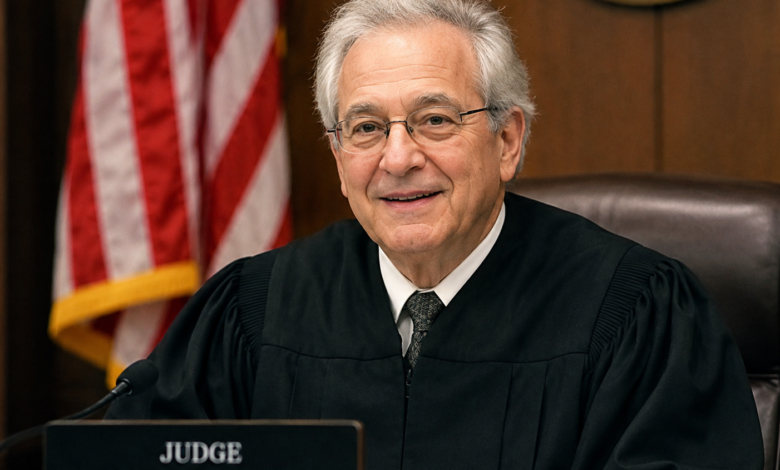

When people search for judge alvin hellerstein, they are often looking for information about one of the most experienced federal judges in the United States. Judge Alvin K. Hellerstein has served on the United States District Court for the Southern District of New York for decades. During his long career, he has handled major cases involving the September 11 attacks, civil rights, government records, business fraud, copyright, and other important legal disputes.



Judge Hellerstein is also known for his careful attention to complicated cases. His courtroom work has placed him in the middle of several matters that attracted national and international attention. His career shows how a lawyer can move from private practice to the federal judiciary and continue serving the public for many years.
According to the Federal Judicial Center, Hellerstein was born in New York in 1933. He studied at Columbia College and Columbia Law School before beginning a legal career that included judicial clerkship, military legal service, and many years in private practice. President Bill Clinton nominated him to the federal bench in 1998, and he later assumed senior status in 2011.
Who Is judge alvin hellerstein?
Judge Alvin K. Hellerstein is a United States federal judge associated with the Southern District of New York, one of the most prominent federal courts in the country. The court handles many significant civil and criminal cases because of its location in Manhattan and its jurisdiction over important financial, commercial, governmental, and international disputes.
Hellerstein was born in New York City on December 28, 1933. His education began at the Bronx High School of Science. He later attended Columbia College, where he earned his undergraduate degree, and Columbia Law School, where he earned his law degree.
His professional background is especially extensive. Before becoming a federal judge, he worked as a law clerk, served in the U.S. Army Judge Advocate General’s Corps, and spent nearly four decades practicing law in New York City.
This background is important because federal judges often bring years of legal experience to the bench. Hellerstein’s experience included litigation, courtroom practice, and complex legal disputes. That foundation helped prepare him for the difficult cases he later handled as a judge.
Early Life and Education
The story of judge alvin hellerstein begins in New York. Growing up in the city gave him an early connection to the community where he would later spend much of his professional life.
Hellerstein attended the Bronx High School of Science. After high school, he went to Columbia College and received his bachelor’s degree in 1954. Two years later, in 1956, he earned his law degree from Columbia Law School. The Federal Judicial Center confirms both degrees as part of his official professional history.
His time at Columbia was particularly important for his legal development. After graduating from law school, Hellerstein worked as a law clerk for Judge Edmund Palmieri of the Southern District of New York from 1956 to 1957.
A clerkship is an important early step for many lawyers who later become judges. It gives a young attorney an opportunity to study how courts analyze evidence, legal arguments, statutes, and judicial decisions.
Hellerstein’s early career therefore gave him experience on both sides of the legal profession: first learning directly from a federal judge and later practicing as an attorney.
Military Legal Service
After his clerkship, Hellerstein served in the U.S. Army Judge Advocate General’s Corps, commonly known as the JAG Corps.
He served from 1957 to 1960. In this role, he gained experience with military law and legal responsibilities connected with the armed forces.
Military legal service can provide lawyers with a different perspective on law. It can involve questions of discipline, procedure, responsibility, and the rights and duties of individuals serving in the military.
For Hellerstein, this period became another part of a broad legal career that eventually included private practice and federal judicial service.
His professional path was not limited to one area of law. Instead, he built experience through several different legal environments.
Long Career in Private Practice
Before becoming a judge, Hellerstein spent a large part of his career as a private attorney in New York City.
The Federal Judicial Center records that he worked in private practice from 1960 until 1998.
During those years, he developed a reputation as a litigation lawyer. He eventually became a senior leader in the litigation department of Stroock & Stroock & Lavan LLP.
Private legal practice gave Hellerstein extensive experience dealing with clients, opposing lawyers, legal documents, negotiations, and courtroom disputes. It also allowed him to see how legal rules affect individuals and organizations outside the courtroom.
That practical experience became valuable when he later took on the responsibilities of a federal judge.
A federal judge must evaluate arguments from opposing parties without acting as an advocate for either side. Years of litigation experience can help a judge understand the strategies lawyers use and identify the central legal questions in a case.
Appointment to the Federal Bench
President Bill Clinton nominated Hellerstein to the United States District Court for the Southern District of New York on May 15, 1998.
The U.S. Senate confirmed him on October 21, 1998, and his judicial commission was issued the next day. He officially joined the federal judiciary in October 1998.
The appointment marked a major transition in his career. After decades representing clients, he became responsible for deciding cases rather than arguing them.
Hellerstein assumed senior status on January 30, 2011. Senior judges remain federal judges and can continue handling cases, although their workload and duties may differ from those of active-status judges.
The official Southern District of New York website currently lists Hellerstein as a District Judge and provides his courtroom and chambers information at the Daniel Patrick Moynihan United States Courthouse in Manhattan.
judge alvin hellerstein and the September Eleven Litigation
One of the most important chapters in the career of judge alvin hellerstein involves litigation connected to the September 11 attacks.
The September 11 attacks created an enormous legal challenge. Victims, families, injured people, businesses, property owners, airlines, insurers, and other groups became involved in complicated lawsuits.
Hellerstein became closely associated with the federal litigation arising from the attacks. In 2003, he handled consolidated litigation involving claims connected to the World Trade Center disaster. Federal Judicial Center records show an order signed by Hellerstein concerning the consolidation of World Trade Center disaster-site litigation.
These cases were extraordinarily complicated because they involved many different parties and legal questions. They also involved questions about liability, damages, insurance, transportation security, and federal law.
In one major phase of the litigation, Hellerstein worked with mediation efforts designed to help resolve large numbers of wrongful-death and personal-injury claims. A 2009 court opinion described the proceedings involving numerous cases and noted the role of mediation in resolving the litigation.
His work on these cases demonstrates an important feature of federal judging: sometimes a judge must manage not just one dispute but a large legal system involving thousands of people.
His Approach to Justice and Compassion
Hellerstein has attracted attention for the way he discusses the relationship between law, fairness, and compassion.
Judges must follow the law, but legal cases often involve real people facing difficult circumstances. Hellerstein has spoken publicly about the importance of listening carefully and considering the human side of cases while still applying the law.
His personal values and judicial philosophy have been discussed in connection with his Jewish education and background. In a law review article, Hellerstein wrote about the influence of Jewish education and Jewish values on a Jewish judge. He also emphasized the importance of pursuing justice while recognizing that a judge must decide cases according to the law.
This aspect of his career has attracted both praise and debate. Some observers have described his approach as empathetic, while others have questioned whether a judge should place too much emphasis on fairness beyond strict legal rules.
That debate is useful because it highlights a larger question in the justice system: how should judges balance legal rules with the human consequences of their decisions?
The Abu Ghraib Photograph Case
Another significant matter involving Hellerstein concerned government records related to abuse at Abu Ghraib prison in Iraq.
The American Civil Liberties Union sued the U.S. Department of Defense and other government agencies under the Freedom of Information Act. The dispute involved photographs and other materials connected with abuse at the prison.
In 2005, Hellerstein ordered the release of additional photographs and videos. The case later continued through appeals and further proceedings.
The case attracted international attention because it involved government transparency and images documenting abuse.
Freedom of Information Act cases can raise difficult questions. The government may argue that certain records should remain secret because of security or other legal concerns, while journalists, civil rights organizations, and the public may argue that disclosure is necessary.
Hellerstein’s decisions in this area made him part of a broader legal discussion about government transparency, accountability, and public access to information.
The Obama “Hope” Poster Case
Hellerstein also presided over litigation involving the famous Barack Obama “Hope” poster created by artist Shepard Fairey.
The dispute involved copyright questions concerning the photograph that became the basis for the well-known poster. Fairey and the Associated Press became involved in litigation over the use of the photograph and copyright rights.
The case became especially interesting because it combined law, politics, photography, art, and popular culture.
The dispute was eventually settled by the parties in 2011. Hellerstein’s involvement in the case demonstrated the broad range of disputes that can reach the Southern District of New York.
For ordinary readers, the case also offers an easy example of why copyright law matters. Artists often build new creative works from existing images, but copyright law determines when that use is permitted and when it may infringe another person’s rights.
judge alvin hellerstein and the Harvey Weinstein Case
The name judge alvin hellerstein has also appeared in connection with litigation involving Harvey Weinstein.
Hellerstein presided over civil litigation involving Weinstein and other parties. In 2019, he dismissed numerous claims while allowing other parts of the case to continue toward trial.
The Weinstein litigation attracted worldwide attention because of the broader allegations surrounding the former Hollywood producer.
It is important to understand that judges do not decide cases based on public opinion. They must examine the claims, evidence, applicable law, procedural rules, and arguments presented by the parties.
This is one reason court decisions can sometimes surprise the public. A judge may dismiss some claims while allowing others to continue. That doesn’t necessarily mean the judge supports one side. Instead, different legal claims may have different requirements.
Michael Cohen and Prison Litigation
In 2020, Hellerstein handled litigation involving Michael Cohen, a former personal attorney to Donald Trump.
Cohen argued that prison officials were retaliating against him because of his refusal to agree not to write a book or communicate with the media while serving the remainder of his sentence under home confinement arrangements.
Hellerstein issued a temporary restraining order that resulted in Cohen being moved from prison to home confinement.
The matter attracted major media attention because of Cohen’s connection to Trump.
Once again, the case illustrates how federal courts can become involved when disputes arise between prisoners and government officials. Courts can examine whether constitutional rights or legal procedures have been violated.
Financial Fraud and Business Cases
Hellerstein has also handled serious financial crime cases.
Financial fraud cases can be extremely complicated because they may involve large sums of money, corporate records, investors, bank transactions, and multiple defendants.
One example involved David Hu, who was associated with IIG Capital. Hellerstein sentenced Hu to twelve years in prison after a fraud case involving more than $100 million in stolen client funds and a Ponzi scheme.
More recently, Hellerstein has presided over other major financial cases, demonstrating that his courtroom work has continued across different areas of federal law.
His experience is particularly relevant in New York, where federal courts regularly handle complex financial disputes and prosecutions.
Bill Hwang and the Archegos Case
Another important financial case connected with Hellerstein involved investor Bill Hwang and Archegos Capital Management.
The Archegos case attracted significant attention because the collapse of the investment firm caused billions of dollars in losses for financial institutions.
Hellerstein presided over the criminal trial and later sentenced Hwang to eighteen years in prison in 2024.
The case demonstrated the difficulty of modern financial prosecutions. Such cases can involve sophisticated investment strategies, complex financial instruments, corporate structures, and huge amounts of data.
For the public, these cases can be difficult to understand at first. However, federal courts play an important role in determining whether prosecutors have proved criminal charges beyond the required legal standard.
Charlie Javice and Modern Financial Crime
Hellerstein also presided over the criminal case involving startup founder Charlie Javice.
The case concerned allegations that JPMorgan Chase was defrauded during its acquisition of Javice’s company. Hellerstein later sentenced Javice to seven years in prison after her conviction.
The case is another example of how traditional fraud laws can apply to modern technology and startup businesses.
Today, companies may have complicated customer databases, digital records, artificial intelligence systems, financial models, and online operations. Yet the basic legal principles surrounding fraud remain important.
Cases like this show why judges need to understand both traditional legal rules and the increasingly complex business environment.
The Nicolás Maduro Case
One of the most internationally significant matters associated with judge alvin hellerstein in recent years is the federal case involving Venezuelan leader Nicolás Maduro.
In January 2026, Hellerstein presided over Maduro’s federal court appearance in Manhattan. Reports identified Hellerstein as the judge overseeing the case.
The case brought worldwide attention because of Maduro’s political position and the international nature of the proceedings.
For a federal judge, such a case presents major challenges. It can involve international law, criminal procedure, national security issues, diplomatic questions, and the rights of defendants.
Despite the international attention, the central responsibility of a federal judge remains the same: apply U.S. law fairly and independently.
That principle is especially important in high-profile cases. A judge cannot simply make a decision because a case is popular or politically important.
Why the Southern District of New York Matters
To understand the importance of Hellerstein’s career, it helps to understand the court where he serves.
The United States District Court for the Southern District of New York covers Manhattan and other areas in the region. It is one of the country’s most well-known federal trial courts.
The court frequently handles cases involving:
- Financial crimes
- Major corporations
- Securities disputes
- International business
- Copyright and intellectual property
- Civil rights
- Government agencies
- Criminal prosecutions
- Immigration matters
- High-profile public figures
Because New York is a global financial and cultural center, cases in the district can have consequences far beyond the courtroom.
Hellerstein’s long career in this environment has therefore given him experience with an unusually broad collection of legal disputes.
Professional Experience at a Glance
| Category | Information |
|---|---|
| Full name | Alvin K. Hellerstein |
| Birth year | 1933 |
| Birthplace | New York City |
| Undergraduate education | Columbia College |
| Law school | Columbia Law School |
| Early legal role | Law clerk to Judge Edmund Palmieri |
| Military service | U.S. Army JAG Corps |
| Private practice | New York City |
| Federal appointment | 1998 |
| Appointing president | Bill Clinton |
| Court | U.S. District Court for the Southern District of New York |
| Senior status | 2011 |
| Major areas of work | Civil litigation, criminal cases, government records, financial matters, mass litigation |
The Federal Judicial Center provides the official historical record of Hellerstein’s federal judicial appointment and professional career.
What Makes His Career Notable?
Several features make Hellerstein’s career stand out.
Decades of Legal Experience
Hellerstein entered private practice in 1960 and was appointed to the federal bench in 1998. His career therefore included many decades of legal work before his appointment.
High-Profile Cases
His docket has included cases involving the September 11 attacks, Abu Ghraib photographs, copyright disputes, major financial fraud, and internationally important criminal proceedings.
Complex Litigation
Many of his cases involved large numbers of people, large quantities of evidence, or complicated legal questions.
Continued Judicial Service
Although he assumed senior status in 2011, he has continued handling important cases.
Public Interest
His cases often involve subjects that affect the public beyond the parties directly involved. This has made his judicial decisions a frequent subject of news coverage and legal discussion.
Understanding His Judicial Philosophy
A judge’s philosophy isn’t always easy to summarize in a few words.
Hellerstein has spoken about the importance of listening, compassion, and justice. At the same time, the federal judicial system requires judges to apply statutes, constitutional principles, precedent, and procedural rules.
This creates a delicate balance.
A judge cannot simply decide what seems emotionally satisfying. The law establishes boundaries. Yet judges must also understand the real-world consequences of legal disputes.
Hellerstein’s career is interesting partly because his public comments have shown an awareness of this tension.
His approach reminds readers that courts aren’t just buildings where lawyers argue. They’re institutions where decisions can affect people’s lives, businesses, families, reputations, and freedoms.
Frequently Asked Questions About judge alvin hellerstein
Who is judge alvin hellerstein?
Judge Alvin K. Hellerstein is a federal judge serving on the United States District Court for the Southern District of New York. He was appointed to the federal bench by President Bill Clinton in 1998.
When was Alvin Hellerstein appointed as a federal judge?
Hellerstein was nominated in May 1998 and confirmed by the U.S. Senate in October 1998. His commission was issued on October 22, 1998.
What did Hellerstein do before becoming a judge?
He worked as a federal judicial law clerk, served in the U.S. Army JAG Corps, and practiced law privately in New York City for many years.
What court does Hellerstein serve on?
He serves on the United States District Court for the Southern District of New York. The official court website lists him as a District Judge and identifies his chambers at the Daniel Patrick Moynihan United States Courthouse in Manhattan.
Is Hellerstein a senior judge?
Yes. He assumed senior status on January 30, 2011.
What are some famous cases associated with Hellerstein?
His judicial career has included litigation related to the September 11 attacks, Abu Ghraib photographs, the Obama “Hope” poster, Harvey Weinstein-related litigation, Michael Cohen’s prison dispute, major financial fraud cases, and the federal prosecution involving Nicolás Maduro.
Why is the September 11 litigation important?
The September 11 litigation involved a large number of claims brought by people injured in the attacks, families of people who died, and other affected parties. Hellerstein played an important role in managing and resolving this complex body of litigation.
Where did Hellerstein study law?
He attended Columbia Law School and received his law degree in 1956.
Lessons From His Long Legal Career
The career of judge alvin hellerstein offers several lessons for people interested in law and public service.
First, a successful legal career usually develops over time. Hellerstein worked as a clerk, served in the military, practiced law for decades, and eventually became a federal judge.
Second, legal knowledge needs to be supported by practical experience. His years as a litigation attorney gave him firsthand knowledge of how complex cases develop.
Third, judges must be prepared to handle difficult subjects. His docket has included tragedy, government secrecy, financial crime, intellectual property, and international criminal matters.
Finally, public service requires independence. High-profile cases can attract enormous public attention, but judges are expected to make decisions according to the law rather than popularity.
The Continuing Legacy of judge alvin hellerstein
The legacy of judge alvin hellerstein is connected to a remarkable period in American legal history. His judicial career has stretched across major changes in technology, finance, national security, media, and international affairs.
From September 11 litigation to modern financial crime cases, his courtroom has dealt with issues that have shaped public discussion.
His career also demonstrates the value of preparation. Before becoming a judge, Hellerstein accumulated experience in education, clerkship, military law, and private litigation. That long preparation helped establish the foundation for his federal judicial service.
For students, young lawyers, and anyone interested in the American justice system, his career offers a useful example of how legal expertise develops through years of study and practice.
Final Thoughts on judge alvin hellerstein
judge alvin hellerstein represents a long and influential career in the American federal judiciary. From his education at Columbia to his early clerkship, military legal service, decades of private practice, and federal appointment, his professional journey has been built around law and public service.
His cases have covered some of the most difficult legal questions of recent decades. The September 11 litigation showed the challenge of handling mass claims after a national tragedy. The Abu Ghraib records litigation raised questions about government transparency. Copyright and entertainment disputes demonstrated the changing relationship between creativity and law. Financial fraud cases showed the importance of accountability in modern markets, while international prosecutions have demonstrated the global reach of federal criminal law.
What makes his story especially meaningful is that a judge’s work isn’t only about making decisions. It is also about listening, studying evidence, understanding legal rules, and protecting the integrity of the judicial process.
Ultimately, judge alvin hellerstein remains an important figure for anyone seeking to understand the role of a federal judge, the work of the Southern District of New York, and the responsibilities that come with a long career in American law.
You may also read
milo yiannopoulos charlie kirk: Their Political Connection, Campus Influence, and Public Legacy