
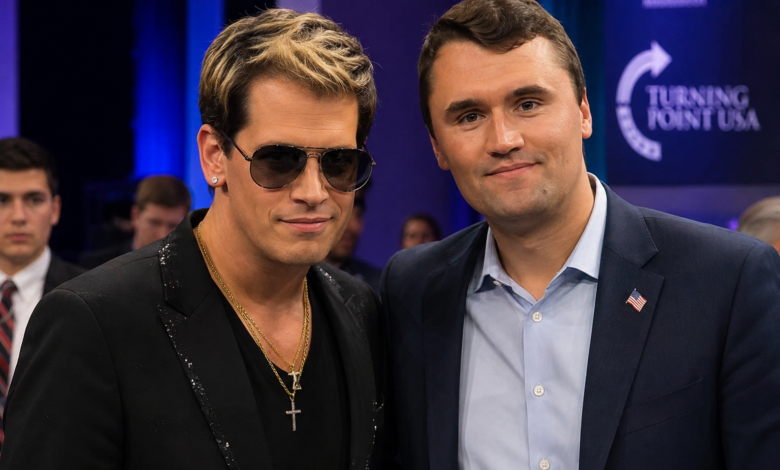
milo yiannopoulos charlie kirk: Their Political Connection, Campus Influence, and Public Legacy

The topic milo yiannopoulos charlie kirk brings together two controversial and highly visible figures from the modern American conservative and campus-politics movement. Although they were different personalities with different styles, both became well known through debates about free speech, political correctness, higher education, and the changing direction of American conservatism.


Milo Yiannopoulos became famous as a provocative media personality who used confrontational language and dramatic campus appearances to attract attention. Charlie Kirk, meanwhile, built a much larger political organization through Turning Point USA (TPUSA), focusing especially on young conservatives and college students. Their paths crossed through the campus speaking circuit, where Kirk’s organization supported or hosted appearances by Yiannopoulos.
Understanding milo yiannopoulos charlie kirk therefore requires more than simply comparing two personalities. It means looking at the political environment that helped both men gain attention, the role of college campuses in their careers, and the lasting debates surrounding their approach to political speech.
Who Was Milo Yiannopoulos?
Milo Yiannopoulos is a British-born media personality and political provocateur who became especially prominent in the United States during the mid-2010s. He was associated with Breitbart News and became known for highly provocative appearances, particularly on college campuses.
His public style was intentionally confrontational. Rather than presenting himself as a traditional political commentator, Yiannopoulos often used humor, insults, theatrical performances, and deliberately controversial subjects to generate discussion and media coverage.
His rise was closely connected to America’s growing campus free-speech debate. During this period, conservative and right-wing speakers increasingly argued that universities were hostile to unpopular opinions. Yiannopoulos made that argument central to his public identity.
His appearances also produced strong opposition. In 2017, planned appearances involving Yiannopoulos at UC Berkeley and other universities became major demonstrations and, in some cases, were canceled or disrupted. The Los Angeles Times later described his 2017 campus appearances as part of a wider conflict over speech and protest.
Who Was Charlie Kirk?
Charlie Kirk was an American conservative activist and the founder of Turning Point USA. He became one of the most recognizable young conservative political organizers in the United States.
Kirk founded Turning Point USA as a campus-focused organization. Its goal was to encourage conservative ideas among students and challenge what Kirk and his supporters viewed as progressive dominance in higher education.
Over time, his influence expanded well beyond college campuses. He became a prominent supporter of Donald Trump and developed relationships with other figures in conservative politics and media. The Independent described Kirk as an important figure in the transformation of the Republican movement during the Trump era.
His organization also created controversial projects such as the Professor Watchlist, which listed professors accused by TPUSA of promoting left-wing political ideas. Supporters described such projects as accountability efforts, while critics argued that they could encourage harassment or intimidation.
Kirk was killed at Utah Valley University in September 2025, an event that had a major impact on American political discussions and on the organization he had built.
milo yiannopoulos charlie kirk and the Campus Conservative Movement
The connection between milo yiannopoulos charlie kirk is easiest to understand by looking at the rise of campus conservatism during the 2010s.
College campuses became important stages for political debate. Conservative groups argued that students needed opportunities to hear speakers who challenged progressive ideas. At the same time, opponents argued that some invited speakers promoted hateful or discriminatory ideas and did not deserve institutional platforms.
Turning Point USA became an important part of this debate.
According to reporting on Kirk’s career, TPUSA organized or supported appearances by controversial figures such as Yiannopoulos. These events sometimes attracted large audiences, but they could also generate protests and security concerns.
This created a cycle:
- A controversial speaker was invited.
- Students and activists organized protests.
- Media organizations reported on the confrontation.
- The speaker received greater national attention.
- The debate over free speech became larger.
In other words, controversy itself could become a powerful form of publicity.
How Their Public Styles Were Different
Although people often discuss milo yiannopoulos charlie kirk together, their public roles weren’t identical.
Yiannopoulos was primarily known as a provocative entertainer and commentator. His approach depended heavily on shock value, humor, and personal confrontation.
Kirk developed a more structured political organization. He built a network of student chapters, activists, events, media projects, and political relationships.
| Area | Milo Yiannopoulos | Charlie Kirk |
|---|---|---|
| Main identity | Political provocateur and commentator | Conservative activist and organizer |
| Major platform | Media and campus appearances | Turning Point USA and political media |
| Public style | Confrontational and theatrical | Organized, political, and debate-focused |
| Main audience | Online audiences and campus audiences | Young conservatives and broader Republican audiences |
| Campus role | Controversial guest speaker | Organizer and conservative movement leader |
| Major issue | Political correctness and cultural conflict | Conservatism, elections, campus politics, and youth activism |
This difference matters. Yiannopoulos could attract enormous attention to a particular event, while Kirk focused on building a long-term political infrastructure.
Why College Campuses Mattered So Much
College campuses became a major battlefield in American political culture.
For conservatives, universities were often presented as places where progressive ideas dominated. Bringing conservative speakers to campuses was therefore more than a speaking engagement. It became a way to challenge the political culture of the university.
Yiannopoulos understood the media value of this approach. His campus tour attracted protests at places including UC Berkeley. The controversy sometimes became bigger than the speech itself.
Kirk adopted a somewhat different strategy. Instead of simply visiting campuses as an individual celebrity, he built an organization that could operate across many universities.
That organizational model helped make Kirk more durable as a political figure.
The Role of Turning Point USA
Turning Point USA was central to understanding the milo yiannopoulos charlie kirk connection.
The organization became known for campus activism, conservative speakers, political campaigns, and youth-oriented messaging. Kirk’s strategy was to make conservatism attractive and accessible to younger Americans.
The organization also became a place where controversial speakers could receive platforms.
Historical accounts of TPUSA show that Yiannopoulos appeared at events associated with the organization. A 2018 profile of TPUSA, for example, described Yiannopoulos speaking at a TPUSA-related event and noted his provocative comments.
That relationship reflected a broader philosophy: supporters believed that controversial speakers should be heard and challenged rather than silenced.
Critics, however, questioned whether giving such speakers a platform could contribute to hostility toward minority groups.
Free Speech Was at the Center of the Debate
Free speech became one of the strongest themes surrounding both figures.
The basic argument from supporters was simple: unpopular opinions shouldn’t automatically be banned. They believed universities should be places where difficult ideas could be discussed openly.
Critics responded that free speech doesn’t mean every institution must provide a platform for every speaker. They also argued that speech can have social consequences, particularly when it targets specific communities.
This disagreement created some of the most intense campus debates of the era.
The 2017 Yiannopoulos events at Berkeley became a notable example. His planned appearance was associated with large protests and serious unrest.
Years later, Kirk continued appearing at campuses where his political views attracted both supporters and protesters. His campus strategy remained an important part of his political identity.
Why Milo Yiannopoulos Became So Controversial
Yiannopoulos deliberately built his reputation around controversy.
He frequently attacked political correctness and progressive social movements. His language was often deliberately provocative, which made him a highly divisive figure.
Supporters saw him as someone willing to say things that other commentators were afraid to say.
Critics saw his approach as harassment, inflammatory rhetoric, and an attempt to gain attention through provocation.
That divide explains why his campus appearances could attract both enthusiastic audiences and large protests.
His controversy also became part of the wider discussion about whether social-media attention rewards increasingly extreme political behavior.
Why Charlie Kirk Became More Influential
Kirk’s influence came from organization as much as personality.
Rather than relying only on individual appearances, he developed an extensive political network. Turning Point USA helped connect young conservatives with speakers, campaigns, events, and political activism.
Kirk also became increasingly involved in national Republican politics.
His relationship with the Trump movement strengthened his national profile. According to the Independent, he was an early supporter of Donald Trump’s presidential campaign and later became a major conservative ally.
That made Kirk different from Yiannopoulos. Kirk’s goal wasn’t simply to become a controversial celebrity. He wanted to influence elections, political organizations, and the future direction of conservatism.
Shared Themes Between the Two Figures
Despite their differences, several themes connect milo yiannopoulos charlie kirk.
Opposition to Political Correctness
Both became associated with criticism of political correctness and progressive cultural politics.
Campus Activism
Both understood the power of college campuses as places where political messages could gain national attention.
Conservative Youth Outreach
Both appealed to younger audiences, although Kirk developed this area into a much larger organizational project.
Media Attention
Both benefited from intense media coverage. Controversy frequently increased public awareness of their activities.
Debate Over Free Speech
Both became involved in arguments about the limits of acceptable political speech.
These shared themes explain why the two names are often discussed together in histories of America’s modern campus culture wars.
The Importance of Protest and Opposition
It would be incomplete to discuss milo yiannopoulos charlie kirk without considering their opponents.
Their events weren’t simply gatherings of people who agreed with them. Many attracted protesters who believed the speakers represented dangerous or discriminatory ideas.
At Berkeley, for example, Yiannopoulos’ 2017 appearance became part of a major confrontation between competing political groups.
Kirk also encountered protests throughout his campus career.
This created an important question for American universities: How should institutions protect free expression while also protecting students, staff, and visitors?
There’s no simple answer.
Universities have to balance constitutional principles, campus policies, security concerns, and the rights of protesters. That’s why these events became larger than individual political personalities.
The Long-Term Impact on Political Media
The story of milo yiannopoulos charlie kirk also shows how political media changed during the digital age.
Traditional political commentators often depended on newspapers, television networks, and radio stations.
The newer generation could use:
- YouTube
- Podcasts
- Social media
- Livestreams
- Independent websites
- Campus events
- Short-form video
This created a direct relationship between political personalities and their audiences.
Yiannopoulos was particularly skilled at using internet culture and controversy to increase visibility. Kirk combined digital media with physical political organizing.
Together, these approaches reflected a broader shift in how political movements communicate.
Controversy Can Build an Audience — But It Has Risks
One important lesson from milo yiannopoulos charlie kirk is that controversy can create attention quickly.
A provocative statement may generate headlines within hours. A campus protest can create thousands of social-media posts. A heated debate can attract viewers who would’ve ignored an ordinary speech.
But there are risks.
When political discussion becomes too focused on outrage, serious policy questions can disappear. Audiences may remember the argument while forgetting the actual issue.
For political movements, this can create a difficult balance between gaining attention and maintaining credibility.
What Happened to the Broader Movement?
Charlie Kirk’s death in 2025 created uncertainty about the future direction of the movement he helped build. Turning Point USA continued organizing political activity, including campus events after his death. A November 2025 event at UC Berkeley, for example, was described as the final stop of the organization’s American Comeback Tour.
This demonstrates an important difference between a personality and an organization.
A personality can disappear from public life, but an organization with staff, chapters, supporters, donors, and media operations can continue.
That organizational structure was one of Kirk’s most significant achievements.
How Their Legacies Should Be Examined
A balanced assessment shouldn’t treat either figure as simply a hero or villain.
Instead, readers should examine their work through several questions:
- What ideas did they promote?
- How did they communicate those ideas?
- Who supported them?
- Who opposed them?
- What impact did their events have?
- Did their strategies encourage useful debate?
- Did some tactics increase political hostility?
- What lessons can universities and political organizations learn?
This approach is more useful than simply repeating partisan descriptions.
History is rarely as simple as social-media arguments make it appear.
Lessons From the milo yiannopoulos charlie kirk Era
The milo yiannopoulos charlie kirk story provides several broader lessons about politics and communication.
Attention Is Powerful
Modern political figures can build large audiences without relying on traditional media organizations.
Young People Matter
Both figures understood that political movements need younger supporters if they want to remain influential.
Campus Politics Can Become National Politics
A speech at a university can become a national news story when the speaker and subject are controversial enough.
Free Speech Requires Responsibility
Freedom of expression is important, but serious political discussion also benefits from evidence, respect, and accountability.
Organizations Can Outlast Individuals
Kirk’s work with Turning Point USA demonstrated how a political movement can become institutional rather than remaining centered entirely on one personality.
A Balanced View of Their Historical Importance
The significance of milo yiannopoulos charlie kirk isn’t that both men held identical political positions. They didn’t.
Their importance comes from the political environment they helped represent.
They emerged during a period when American politics was becoming increasingly divided, social media was transforming public debate, and college campuses were becoming major symbols in the national argument over free speech.
Yiannopoulos represented the provocative, personality-driven side of this change.
Kirk represented the organized, movement-building side.
Their careers therefore provide useful examples of two different ways political influence can be created.
Final Thoughts on milo yiannopoulos charlie kirk
The story of milo yiannopoulos charlie kirk is ultimately a story about modern political communication, campus activism, controversy, and the struggle over competing ideas.
Milo Yiannopoulos became known for provocative performances and aggressive challenges to political correctness. Charlie Kirk built a much broader political organization and became a major figure in youth-oriented American conservatism. Their connection was especially visible through the campus speaking movement and Turning Point USA’s willingness to give controversial conservative speakers a platform.
The most useful way to understand this history is to look beyond political labels. Their careers raise lasting questions about free speech, political organization, media influence, protest, and the responsibilities that come with having a large public audience.
For students, writers, researchers, and anyone trying to understand America’s recent political history, milo yiannopoulos charlie kirk remains a useful case study in how personalities, organizations, universities, and digital media can interact to shape public debate.
You may also read
Kim Cattrall: A Remarkable Journey Through Acting, Television, and Lasting Success